















Fernando Núñez, Former Owner of Ágora TPV: Technology, Software and How to Build a Strong Product

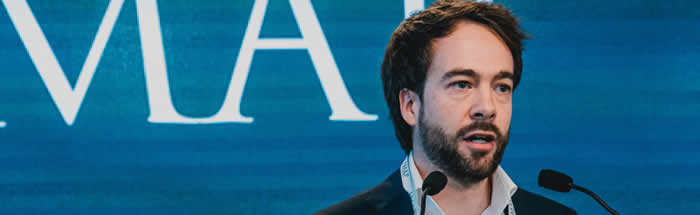
In a new episode of Mergers and Acquisitions, the business podcast, we spoke with Fernando Núñez, former owner of Ágora TPV and a professional with more than 30 years of experience in technology, software and product development.
Throughout the episode, Fernando shares valuable insights for founders, executives, investors and companies in the technology sector: how to evolve from a services business into a product company, how to avoid common software development mistakes, and the role that technology due diligence and artificial intelligence now play in a company’s growth and valuation.
From Electronic Engineering to Software Product Development
Fernando Núñez’s career closely reflects the evolution of the technology sector in Spain itself. From his early years in an electronic engineering company, he experienced several major transitions first-hand: custom hardware development, mobility solutions in the 1990s, software for large companies and, eventually, a move towards a scalable product model.
One of the most interesting takeaways from the episode is that many technology companies are not born as product businesses. In many cases, that transformation comes after years of service-based work, when the team realizes that relying solely on bespoke projects limits growth, complicates operations and creates excessive dependence on the client.
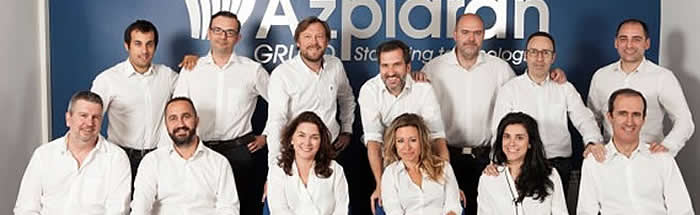
It was in this context that Ágora TPV evolved into a solution that gradually established itself in the restaurant sector, built around a clear idea: to create robust, affordable and easy-to-maintain software, avoiding models based on expensive support or constant customization.
Ágora TPV and the Importance of Building a Scalable Product
One of the central themes of the conversation is the real difficulty of moving from selling custom projects to building a common product for thousands of customers.
Fernando explains that the challenge is not only technical, but also internal: changing the company mindset, learning to say no to certain commercial requests and maintaining a long-term strategic vision. A strong product is not built by accepting every customization request, but by prioritizing what brings value to the market as a whole.
This approach was key to the development of Ágora TPV. Rather than creating complex and expensive software, the goal was to build a reliable, scalable and flexible tool capable of working effectively across different types of establishments, from small businesses to restaurant chains.
This view directly connects with a fundamental principle in any software company: scalability. When a solution depends too heavily on specific adaptations, technical debt increases and the product loses consistency. When it is designed with a clear architecture and a shared vision, the company gains efficiency, growth potential and market strength.
Distribution Channel, Trust and Growth
Another particularly interesting aspect of the podcast is how Ágora TPV built its growth through the distribution channel.
Instead of relying entirely on direct sales, the strategy focused on professionalizing the channel, training distributors and building a trusted network capable of providing real support to end customers. In a sector such as hospitality, where service continuity is critical, this model helped strengthen the value proposition and consolidate a solid customer base.
This reflection is also highly relevant from a business perspective: in technology, having a good product is not enough. Companies must understand how it reaches the market, who implements it, who maintains it and what kind of experience the end user receives. In many cases, the true competitive advantage lies precisely there.
Technology Due Diligence: Beyond the Code
During the episode, Fernando also explores one of the most relevant issues in the investment and tech M&A ecosystem: technology due diligence.
His approach is clear. A rigorous technology review should not focus only on whether the software “works”, but on four major pillars: infrastructure, scalability and maintainability, cybersecurity and intellectual property.
This is especially important in investment or acquisition processes involving technology companies. A business may show strong financial performance, but if it is supported by a monolithic architecture that is difficult to evolve, an excessive dependence on specific technical profiles or risks linked to code ownership and licensing, the impact on valuation can be significant.
Fernando also emphasizes a key idea: identifying a technological issue should not only serve to highlight a risk, but also to determine how it can be solved. That practical mindset is what gives real value to well-executed technology due diligence.
Technical Debt, Talent and Long-Term Vision
The concept of technical debt appears several times throughout the podcast, and for good reason. In many software companies, this debt does not arise from a lack of technical ability, but from poorly managed business decisions: prioritizing one-off developments, accepting unsustainable modifications or growing without a technology foundation designed to scale.
Here, Fernando offers a very useful reflection for any technology company: it is much easier to say yes than to say no, but many times saying yes leads to failure, while saying no protects the product.
He also highlights the importance of talent and team continuity. In technology businesses, understanding who actually develops the product, where knowledge is concentrated and how that know-how is retained is critical both for growth and for any corporate transaction.
Artificial Intelligence: Where the Real Value Lies
The final part of the episode addresses one of the market’s most relevant current topics: artificial intelligence.
Fernando offers a particularly interesting view because he avoids the superficial angle. Rather than assuming that all the value lies in the models themselves, his view is that the true differentiating asset lies in data, processes and the specific knowledge companies have about their customers and operations.
From this perspective, artificial intelligence does not automatically replace leading companies in each sector. On the contrary, it can strengthen their position if they know how to leverage their information, structure it properly and apply AI on top of a real business foundation.
This is an especially relevant reflection for software companies, investors and management teams: in today’s technology landscape, it is not enough to say that a company “uses AI”. The real question is different: what data does it have, which processes does it understand better than anyone else, and can that become a sustainable competitive advantage?
Technology, Product and Value Creation
Fernando Núñez’s conversation leaves one clear conclusion: building a strong technology company requires much more than developing software.
It requires product vision, sound prioritization, the ability to scale, the discipline to avoid technical debt and a deep understanding of how technology creates real value for customers, investors and the market. And in an environment where artificial intelligence is accelerating every change, that combination of strategy, execution and long-term focus is more important than ever.
Listen to the Full Episode
If you want to learn more about the evolution of Ágora TPV, the challenges of building scalable software, technology due diligence and the real impact of artificial intelligence on companies, you can now listen to the full podcast episode.
Listen to the full episode here https://open.spotify.com/episode/0SVj2a9oGTlm21IAm1Ce6t?si=NseSKENcSuSCPuE4vha3kg