















Interview – Pork sector and integrated meat industry: value-chain control, certifications and consolidation
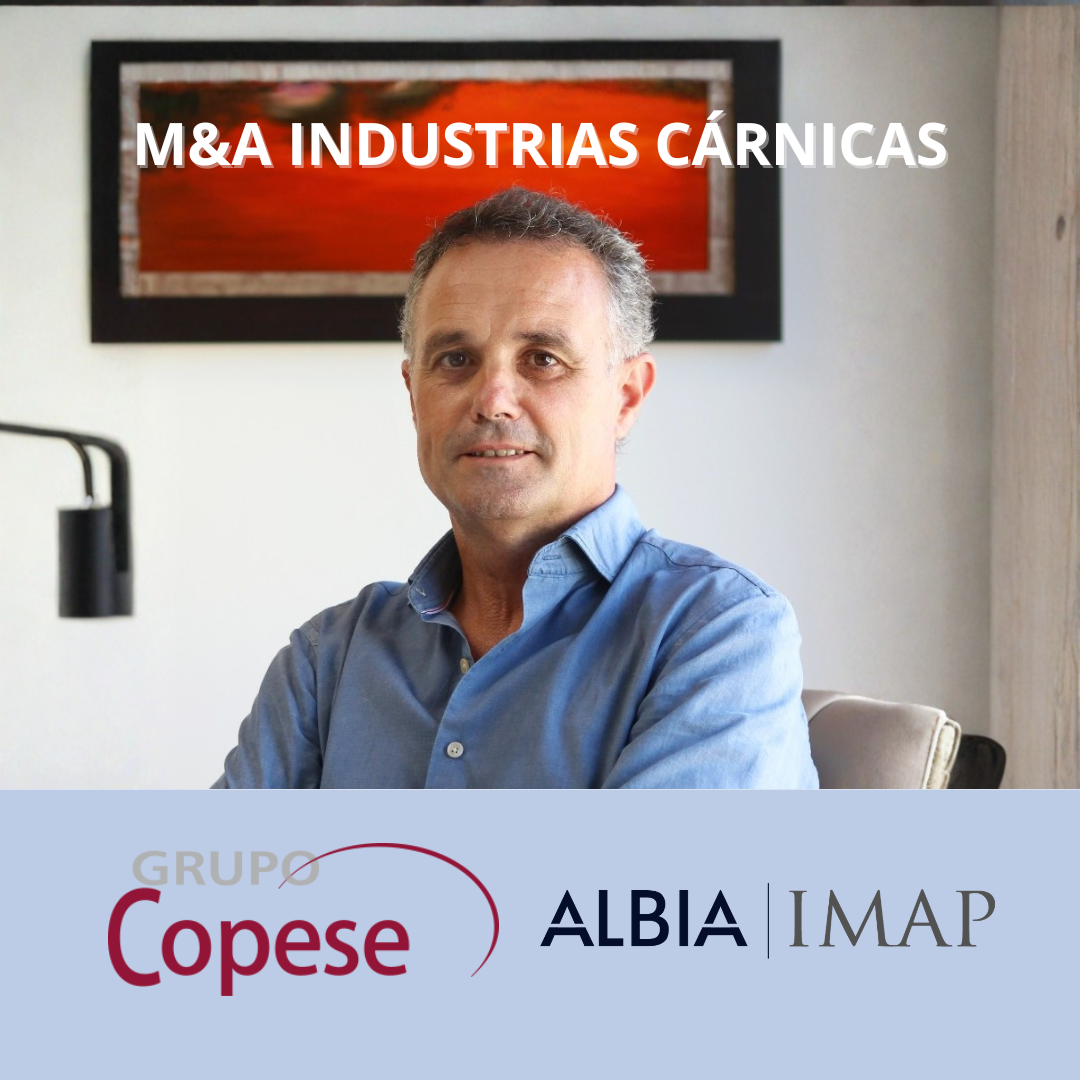
In Albia IMAP’s M&A Report – Meat Industry (2026), we interview José Muñoz, CEO of Grupo Alimentario Copese, to take a closer look at the realities of Spain’s integrated meat industry and the dynamics shaping the pork sector. Copese stands out for its commitment to vertical integration—from feed production, breeding and fattening, through processing and the manufacture of finished products—while maintaining a strong focus on quality, food safety and traceability. In this conversation, we discuss the group’s positioning (with a €150m revenue forecast for 2025) and one of the market’s key trends: sector concentration through mergers and acquisitions (M&A). We also touch on the importance of standards such as IFS/BRC and the role of Spain’s production capacity as it continues to compete and expand across European and international markets.
Here is the interview:
“In this interview, we take a closer look at the dynamics of Spain’s food sector—more specifically, the integrated meat industry. Together with José Muñoz, CEO of Grupo Copese, we discuss the group’s evolution as well as the main trends shaping the subsector.
Could you briefly tell us about Copese’s activity, José?
Grupo Alimentario Copese is a company that controls the entire pork value chain, from feed manufacturing to pig breeding and fattening, meat processing, and the production of prepared and cooked products—always ensuring maximum quality and traceability. Copese is the group company responsible for feed production and for breeding under an integration model across the group’s entire pork production. Meanwhile, Agropecuaria Entrepinos manages the farms owned by the company, holding ownership of these facilities and taking care of staff management, maintenance of the premises, environmental sustainability and all tasks typically carried out by a livestock farmer. This company works exclusively for Copese, as do many other farmers who provide their services through an integration contract.
Unlike most companies in the sector, Grupo Alimentario Copese owns farms, which strengthens its independence and control capabilities. Today, the group manages 90% of its breeding sows and 40% of its fattening units directly. Hola Food is the company that owns the meat plant in Villacastín (Segovia), where all the group’s meat is processed. Around 10% of its production is exported, while the remainder supplies the domestic market, serving both traditional butchers and manufacturers and distributors across different parts of Spain. For international markets, we hold BRC and IFS certifications, as well as specific approvals for countries such as China, South Korea, Japan, the Philippines, Vietnam, South Africa, Brazil, Chile, Singapore and Peru. Finally, Eresma Elaborados operates the plant dedicated to producing hams, cured meats and cooked products, offering a wide range of high-quality items aimed at delicatessen clients and the HORECA channel.
How would you describe Copese’s current positioning in the meat segment?
With a revenue forecast of €150 million for 2025, Grupo Alimentario Copese has consolidated its position as one of the most prominent companies in our sector within our province and even our autonomous region, although at national level there are companies with greater production capacity. Our growth has been steady and sustained: in 2011 we achieved revenues of €30 million and, just over a decade later, that figure has multiplied fivefold to €150 million. We are characterised by versatility and an ability to adapt to market changes. In fact, we were one of the first companies to vertically integrate all processes back in 1992.
From your perspective, what are the main trends transforming the food sector in Spain and Europe, and more specifically the meat industry?
The Spanish and European food sector is undergoing a period of profound transformation. One of the most notable trends is sector consolidation through mergers and acquisitions. Companies are becoming larger and, therefore, gaining greater market share. In this context, Spain continues to play a leading role. Although the pace of growth in meat production has moderated, we are still expanding our capacity, while other European countries are reducing theirs. This situation opens up new opportunities for Spain—not only in third-country markets, where we were previously more concentrated, but also across European markets. On the other hand, the Iberian pork segment represents a major opportunity for Spain, as Spain is the only producer of this type, which differs from white pork in terms of production costs and meat quality”
Download the M&A report on the meat sector by clicking here.